 UK (English)

The thermal management challenge facing modern data centres has reached unprecedented levels. As AI workloads drive rack power densities from 4-6kW to 40-60kW and beyond, every watt of electrical power consumed translates directly into heat that must be efficiently removed to maintain equipment reliability and prevent costly downtime.
Copper's exceptional thermal properties make it indispensable throughout data centre cooling infrastructure, from the heat exchangers in CRAC units to the distribution systems that move heat away from critical equipment. Beyond dedicated cooling systems, copper plays a crucial dual role in electrical distribution components, where its superior thermal conductivity helps dissipate heat generated by power transmission itself.
At MSS International, our focus on precision-engineered electrical components and assemblies means understanding the complete thermal picture. While we don't manufacture cooling equipment or piping systems, our electrical components must integrate seamlessly with cooling infrastructure, and their thermal performance directly impacts overall facility efficiency.
Here's what we'll cover:
- The critical importance of thermal management in high-density data centres
- Why copper's thermal properties matter for both cooling and electrical systems
- How copper enables efficient heat exchange in cooling infrastructure
- Thermal considerations in electrical distribution component design
- Energy efficiency and sustainability benefits
- Future trends in data centre thermal management
The thermal management challenge in modern data centres
Every watt of electrical power consumed in a data centre ultimately becomes heat. IT equipment (servers, storage, networking) generates heat through computational work. Power distribution systems generate additional heat through I²R losses in conductors and connections. All of this thermal energy must be continuously removed to prevent equipment from overheating, throttling performance, or failing entirely.
Heat generation at unprecedented scale
Traditional data centre racks consuming 4-6kW generated manageable heat loads that conventional cooling approaches could handle effectively. Modern AI-ready infrastructure demanding 40-60kW per rack has fundamentally changed the thermal equation. A single AI rack can generate as much heat as 15-20 traditional server configurations, concentrating enormous thermal loads in compact footprints.
The challenge extends beyond IT equipment. As discussed in our article on copper busbars in data centres, power distribution systems themselves generate significant heat. High-current electrical distribution can contribute substantial thermal loads that cooling systems must address alongside heat from computing equipment.
The economic impact of cooling
Cooling typically represents 30-40% of total data centre energy consumption. This makes thermal management not just a technical requirement but a major operational cost driver. Facilities measure overall efficiency through Power Usage Effectiveness (PUE), the ratio of total facility power to IT equipment power. Modern efficient data centres target PUE values of 1.2-1.3, meaning cooling, power distribution, and other infrastructure consume only 20-30% as much power as IT equipment. Achieving these efficiency levels demands effective thermal management throughout the facility.
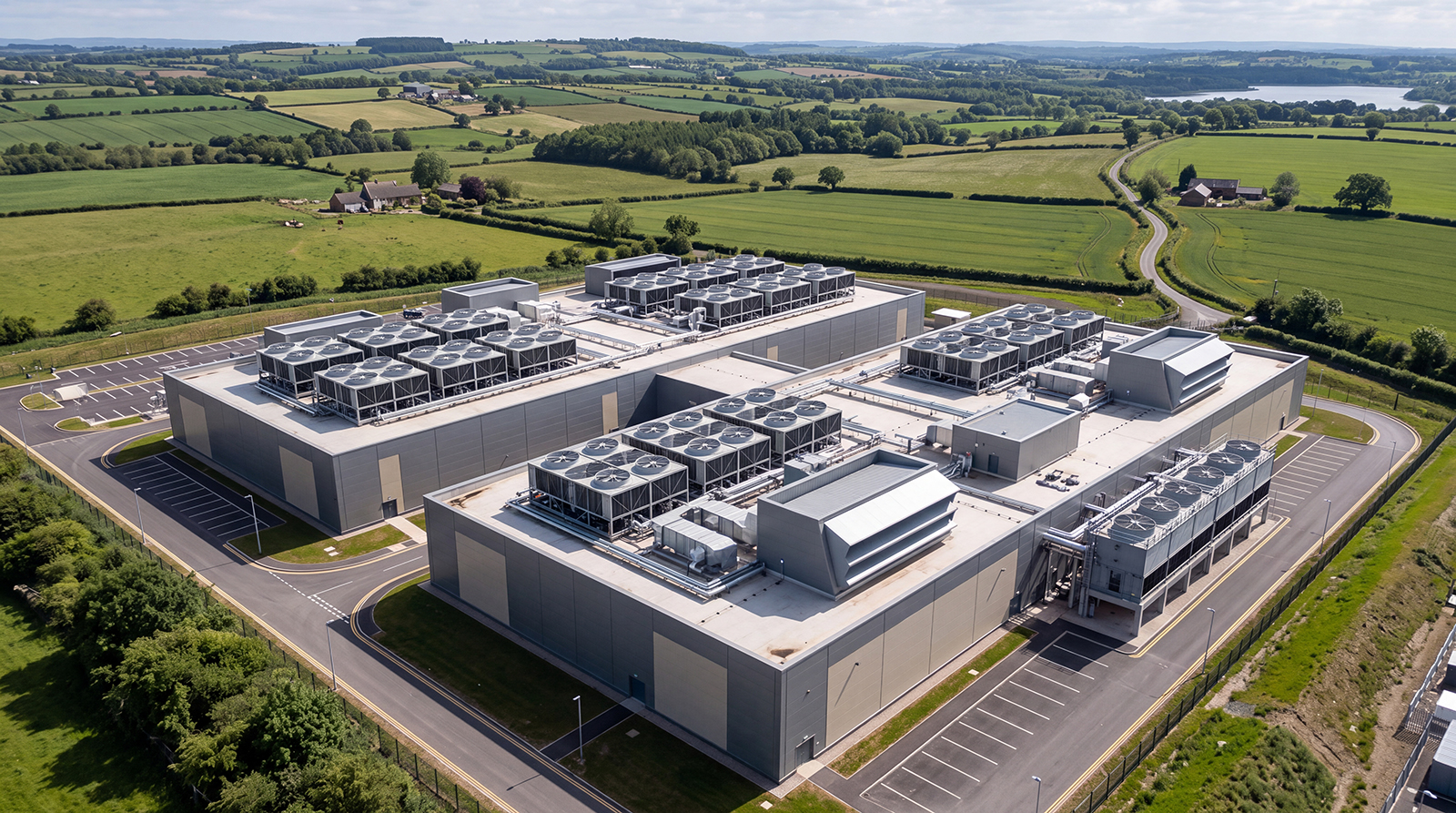
The cost of inadequate cooling extends beyond energy consumption. Equipment operating at elevated temperatures experiences reduced reliability and shorter service life. Performance throttling due to thermal limits reduces the computational capacity that facilities can deliver. In extreme cases, cooling failures can cause widespread equipment damage and extended outages with costs reaching millions of dollars per hour.
Why copper dominates thermal management applications
Thermal conductivity: the fundamental advantage
Copper's thermal conductivity (approximately 400 W/m·K at room temperature) substantially exceeds most alternative materials. Aluminium, often considered for cost reasons, provides only about 230 W/m·K, roughly 60% less thermal conductivity than copper. This difference directly impacts heat transfer efficiency in every application where copper contacts heat sources or cooling media.
Higher thermal conductivity enables more compact heat exchanger designs. For a given heat transfer requirement, copper heat exchangers can use less surface area or smaller temperature differences between hot and cold sides. This efficiency translates to smaller, lighter equipment or improved performance from the same physical size.
The thermal advantage applies equally to cooling equipment and electrical components. In heat exchangers, efficient thermal transfer between refrigerant or chilled water and air minimises energy consumption. In electrical busbars and connections, efficient heat conduction away from current-carrying components prevents hot spots and enables higher current capacity in compact installations.
Corrosion resistance in demanding environments
Data centre cooling systems operate continuously, often for decades, in conditions that challenge material durability. Chilled water systems may experience water quality variations, temperature cycling, and condensation. Direct expansion refrigeration systems expose components to refrigerants and temperature extremes.
Copper naturally forms a protective oxide layer that inhibits further corrosion in most water-based systems. This characteristic, combined with proven compatibility with common refrigerants, makes copper the material of choice for long-term reliability in cooling applications. Properly maintained copper cooling systems routinely provide 20-30 years of reliable service, supporting the long-term infrastructure investments that data centres represent.
Proven performance across industries
Copper's dominance in heat transfer applications extends far beyond data centres. HVAC systems in commercial buildings, residential air conditioning, automotive cooling, industrial heat recovery, and countless other applications rely on copper heat exchangers. This extensive track record provides confidence in performance and reliability while supporting a mature supply chain and extensive manufacturing expertise.
Copper in data centre cooling infrastructure
Copper's thermal properties make it the material of choice throughout data centre cooling systems. From traditional air cooling to emerging liquid cooling technologies, efficient heat transfer depends on copper's exceptional thermal conductivity and proven reliability.
CRAC and CRAH systems
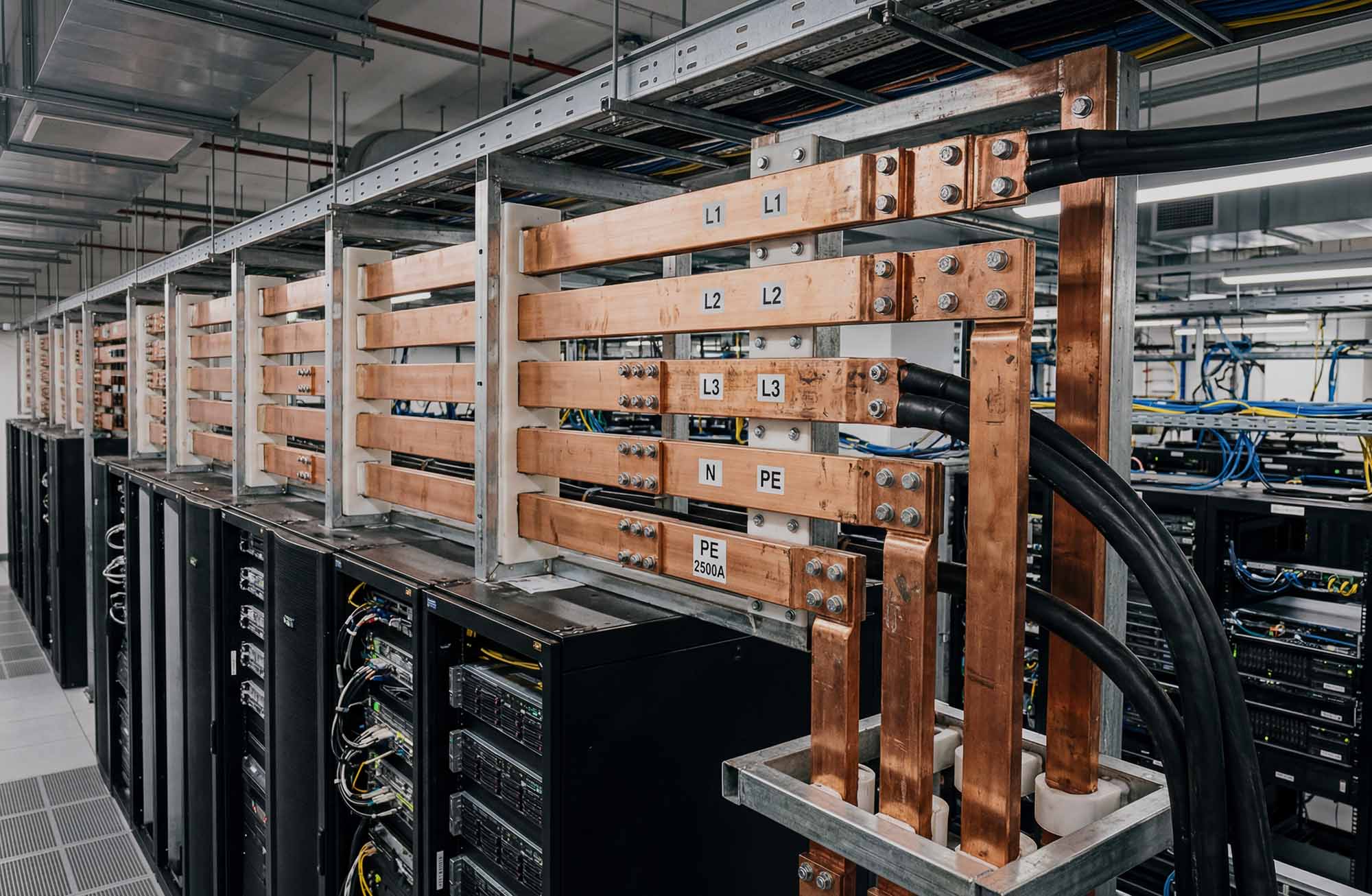
Computer Room Air Conditioning (CRAC) units and Computer Room Air Handler (CRAH) units form the backbone of traditional data centre cooling. These systems circulate air through the data centre while removing heat through various mechanisms.
CRAC units with direct expansion refrigeration:
- Copper coils serve as evaporators where refrigerant absorbs heat from data centre air
- Superior thermal conductivity enables efficient heat transfer from air to refrigerant
- Compatibility with refrigerants ensures reliable long-term operation
- Copper condenser coils reject heat to external air or water
CRAH units with chilled water cooling:
- Copper coils act as heat exchangers between chilled water and data centre air
- Both water-side and air-side heat transfer benefit from copper's thermal properties
- Compact coil designs fit within space-constrained environments
- Decades of proven performance in demanding applications
Chilled water distribution networks
Large data centres typically employ central chilled water plants serving multiple cooling units throughout the facility. Copper piping has traditionally distributed chilled water, though various materials have gained adoption in modern installations. Heat exchangers at critical points (chillers, cooling towers, air handlers) typically employ copper for actual heat transfer surfaces, where the material's thermal efficiency enables compact, effective designs necessary for overall system performance.
Emerging liquid cooling technologies
The extreme power densities of AI workloads are driving adoption of liquid cooling technologies that bring cooling media directly to heat sources.
Direct-to-chip cooling:
- Liquid-cooled cold plates mounted directly on processors
- Removes heat at the source rather than relying on air cooling
- Copper cold plates enable compact, high-performance designs
- Critical for supporting 40kW+ rack densities
Rear-door heat exchangers:
- Attach to rack backs, cooling exhaust air before it enters the data centre
- Copper heat exchanger tubes provide efficient heat transfer
- Enable higher rack densities without facility-wide cooling upgrades
- Growing adoption as transitional technology
As liquid cooling adoption grows, copper's thermal properties become increasingly critical to data centre cooling effectiveness.
Thermal considerations in electrical distribution
While cooling systems remove heat from IT equipment, electrical distribution systems themselves contribute significantly to facility heat loads. This is where MSS International's expertise in precision-engineered copper components directly supports data centre thermal performance.
Heat generation from power distribution
Electrical current flowing through conductors generates heat through I²R losses. As detailed in our article on copper busbars, this heating becomes substantial in high-current distribution systems.
Sources of thermal load in electrical systems:
- Busbar conductors can generate 200W per metre in high-current applications
- Connection points create localised heating even with proper design
- Switchgear, transformers, and UPS systems add to facility heat load
- PDUs and distribution equipment generate heat during operation
Poor connections represent particular thermal challenges. Even slight increases in connection resistance at high currents create dangerous hot spots compromising both electrical safety and reliability. Proper design, adequate conductor surface area, and correct torque specifications prevent these issues.
Copper's dual role: electrical and thermal performance
Copper's simultaneous excellence in electrical conductivity and thermal conductivity creates unique advantages for data centre electrical components. The same material properties that enable efficient power transmission also facilitate effective heat dissipation.
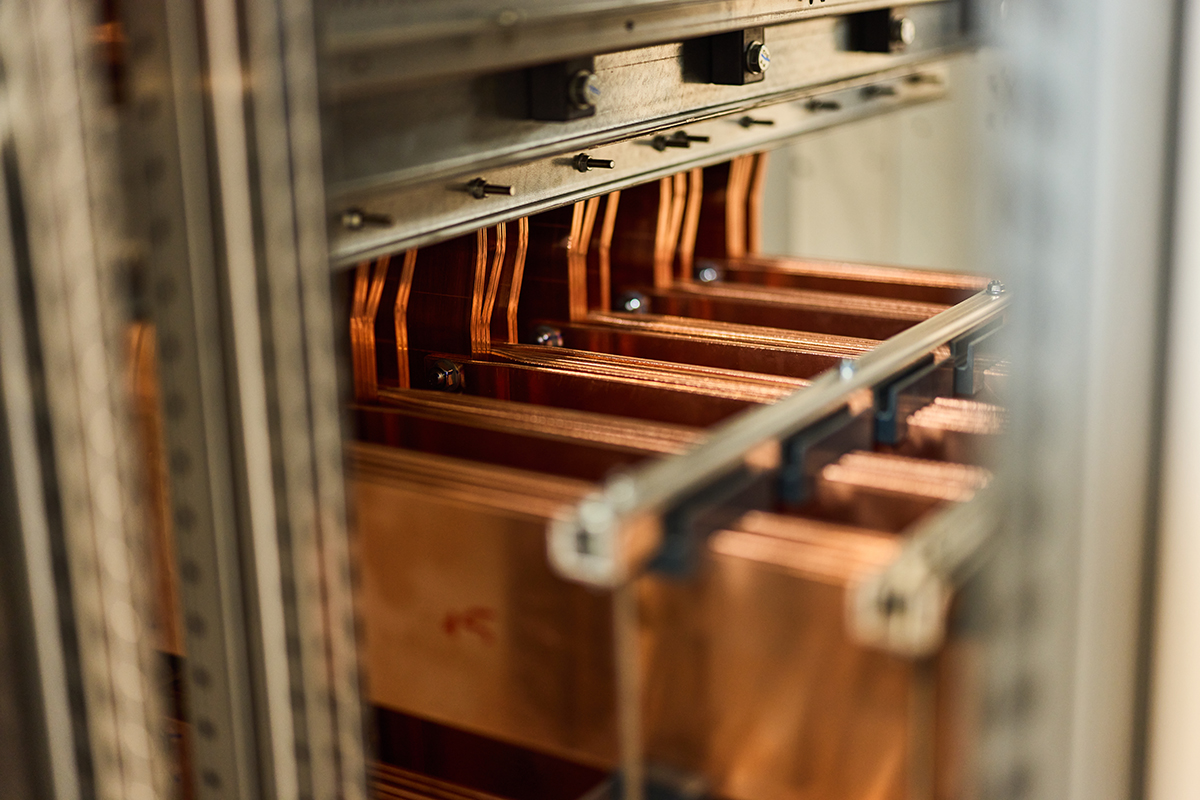
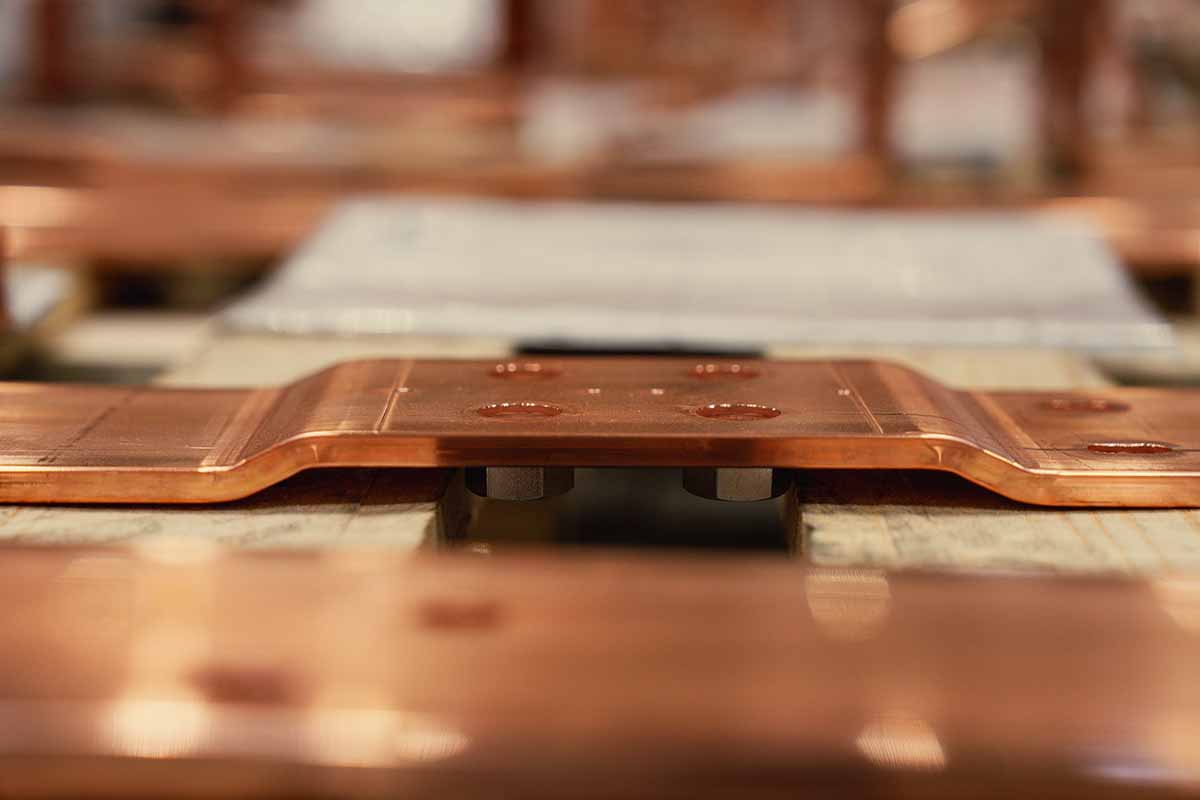
In busbar systems: Copper busbars' superior electrical conductivity minimises resistance and heat generation per ampere of current. Simultaneously, copper's thermal conductivity distributes generated heat along conductor length, preventing localised hot spots. The large surface area of busbar configurations enables heat dissipation through natural convection.
In electrical connections: Copper's thermal properties help maintain acceptable temperatures at bolted connections, pressed contacts, and welded joints. Heat generated at connection interfaces conducts into adjacent copper material where larger surface areas enable dissipation.
In power distribution components: Switchgear components, circuit breakers, and disconnect switches incorporate copper for both electrical and thermal performance. Heat generated during current interruption or normal operation must be quickly dissipated to prevent damage and ensure reliable operation.
MSS International: precision copper components with thermal awareness
At MSS International, thermal performance considerations integrate into every electrical component design. Our products must operate reliably within the demanding thermal environment of modern data centres, and their thermal characteristics directly impact overall facility efficiency.
Electrical components engineered for thermal performance
Our DC busbar systems exemplify the integration of electrical and thermal design considerations:
- Validated through advanced heat and electrical resistance simulations
- Designed to maintain safe operating temperatures while delivering required current capacity
- Surface area optimised for natural convective cooling
- Connection designs minimising thermal resistance at joints
Connection assemblies and disconnector systems undergo rigorous thermal testing:
- Thermal cycling tests simulate years of operational load variations
- Testing confirms connections maintain integrity without developing high-resistance hot spots
- Torque specifications ensure proper contact pressure for both electrical and thermal performance
- Validation under real-world operating conditions
Custom assemblies address specific thermal challenges in unique installations, whether accommodating restricted airflow, elevated ambient temperatures, or particularly high current densities.
Manufacturing capabilities supporting thermal performance
Our precision manufacturing processes ensure consistent thermal and electrical performance:
CNC machining produces complex geometries with tight tolerances ensuring proper fit and thermal contact. Connection surfaces must be flat and smooth to maximise contact area and minimise thermal resistance at interfaces.
Forming and pressing operations create conductor configurations optimising surface area for heat dissipation. Proper forming maintains material properties critical for both electrical and thermal performance.
Surface treatments including tin, silver, and nickel plating provide corrosion protection while maintaining thermal and electrical conductivity at connection interfaces.
Quality control and testing throughout manufacturing verifies both electrical and thermal characteristics. Our ISO 9001 and IATF 16949 certified quality management systems document all testing, providing customers with confidence in component performance.
Material excellence for demanding applications
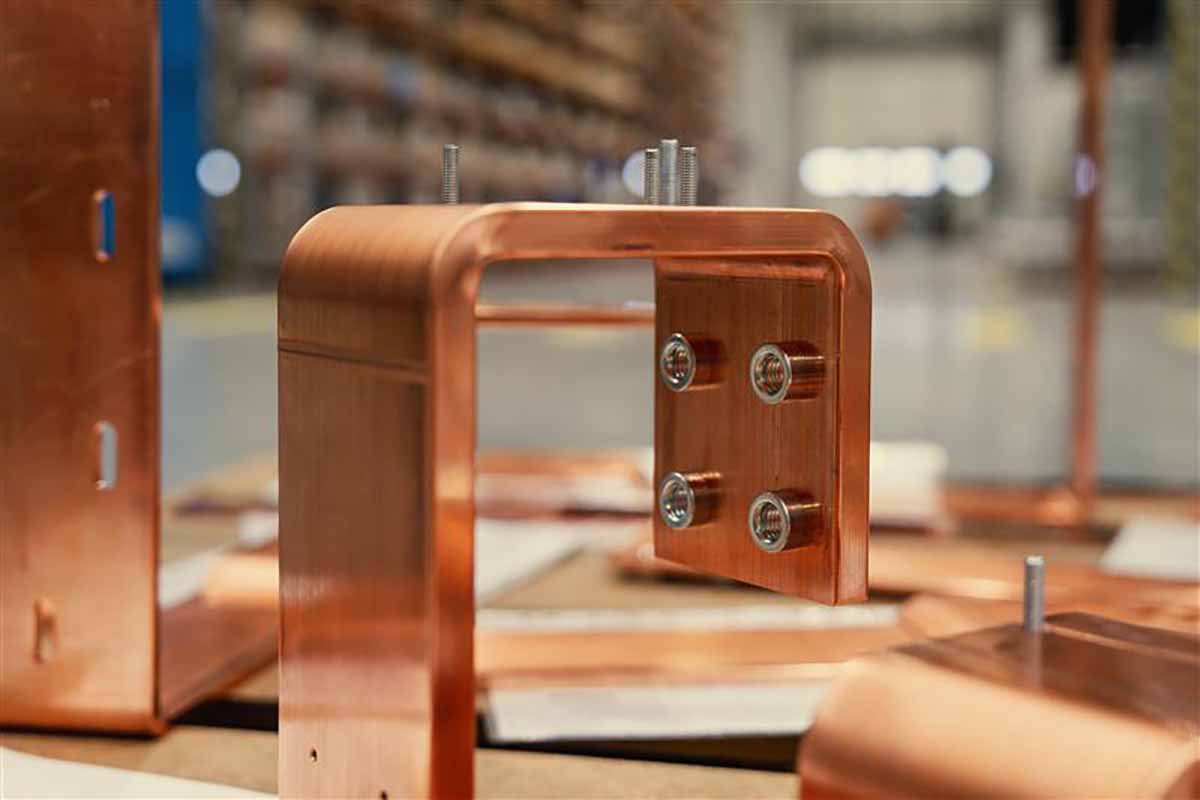
We manufacture components from Electrolytic Tough Pitch (ETP) copper, specified for its exceptional purity (99.9% copper minimum) and corresponding high electrical and thermal conductivity. This material choice ensures optimal performance in both electrical transmission and heat dissipation.
Our commitment to sustainability drives continuous efforts to increase recycled copper content while maintaining the purity standards that electrical and thermal applications demand. Copper can be recycled indefinitely without performance degradation, supporting both environmental objectives and material cost management.
Energy efficiency and sustainability benefits
Efficient electrical components reduce cooling requirements
The relationship between electrical efficiency and cooling load is direct and substantial. Every watt lost to resistance in electrical distribution becomes heat that cooling systems must remove. Reducing electrical losses therefore delivers compounded energy savings, both in lower electrical consumption and reduced cooling energy.
Consider the efficiency impact across a facility. More efficient copper busbars with lower resistance waste less power as heat. This reduces both the electrical energy consumed and the cooling capacity required. Since cooling systems themselves consume power (and generate some waste heat), the total facility energy savings exceed the direct electrical loss reduction.
High-quality electrical connections maintained at proper torque specifications prevent the development of high-resistance hot spots. These problematic connections can waste substantial energy while creating local thermal challenges for cooling systems. Proper initial installation and periodic verification maintain efficiency throughout component service life.
Copper's sustainability advantages in electrical applications
The sustainability benefits of copper in electrical components parallel those in cooling systems. Long service life (20-30+ years typical for properly installed busbar systems) reduces replacement frequency and associated material consumption. Copper's natural corrosion resistance minimises maintenance requirements, reducing both operational costs and environmental impact of maintenance activities.
At end of life, copper components retain substantial value that supports recycling. MSS International's scrap purchase services help data centre operators recover value from retired components while ensuring materials re-enter the supply chain. This closed-loop approach reduces primary copper demand, and recycled copper production requires approximately 85% less energy than primary production from ore.
Our manufacturing facilities incorporate sustainability throughout operations. Our sites utilise 25% renewable energy, with ongoing efforts to increase this percentage. We work continuously with copper suppliers to maximise recycled content while maintaining the purity and performance characteristics that electrical applications demand.
Future trends in data centre thermal management
Rising power densities demand better thermal solutions
Industry trends point toward continued increases in rack power densities. AI and machine learning workloads show no signs of reducing computational intensity. Each processor generation delivers more performance, typically accompanied by increased power consumption and heat generation. Data centres must continually adapt thermal management infrastructure to accommodate these demands.
Liquid cooling adoption will likely accelerate as air cooling reaches practical limits. Even the most efficient air cooling struggles with rack densities above 30-40kW. Direct-to-chip and immersion cooling technologies promise to support much higher densities, but require infrastructure changes and careful integration planning.
Electrical infrastructure must evolve alongside cooling
Higher power densities demand not only more cooling capacity but also more robust electrical distribution. The electrical and thermal challenges are inseparable. Copper busbars and electrical components designed for high-current applications must consider thermal performance as carefully as electrical capacity.
Integration planning becomes increasingly important. Facility designers must consider how electrical distribution components and cooling systems work together. Heat generated by electrical systems affects cooling load calculations. Physical placement of busbars and cooling equipment must allow adequate airflow and thermal management for both systems.
The continued importance of copper
Copper's fundamental material properties (exceptional electrical and thermal conductivity, corrosion resistance, manufacturability, and recyclability) ensure its continued importance across evolving data centre infrastructure. Whether in traditional air-cooled facilities or next-generation liquid-cooled installations, whether in electrical distribution or cooling systems, copper's unique combination of properties remains difficult to match with alternative materials.
New technologies may change how copper is used but are unlikely to eliminate its role. Direct-to-chip liquid cooling still requires efficient heat transfer to cooling fluid, a role copper cold plates fill effectively. Higher voltage DC distribution systems still need conductive, thermally capable busbars. Energy efficiency imperatives make copper's low-loss characteristics increasingly valuable as facilities scale.
Conclusion: thermal management as infrastructure foundation
Effective thermal management represents a fundamental requirement for modern data centre operations. The close relationship between electrical distribution, power consumption, and cooling requirements means these systems must be considered holistically rather than in isolation.
Copper's exceptional thermal and electrical properties make it indispensable across data centre infrastructure. From heat exchangers in cooling equipment to electrical distribution components, copper enables the efficient, reliable performance that mission-critical facilities demand. Understanding this complete picture helps facility designers, operators, and component suppliers make informed decisions that optimise both performance and efficiency.
At MSS International, our focus on precision-engineered electrical components and assemblies means we contribute to data centre thermal management through products designed with thermal considerations integrated from the start. Our comprehensive manufacturing capabilities, quality assurance processes, and commitment to sustainable practices ensure components that support both current operations and future requirements.
The future of data centre infrastructure will demand even more from both electrical and cooling systems. Copper's proven performance, combined with continuous innovation in component design and manufacturing, positions it to remain central to solving these evolving challenges.
Ready to discuss how precision-engineered copper electrical components can support your data centre's thermal management requirements? Contact MSS International to explore custom solutions designed for reliable performance in demanding applications.
Further reading:
- For a comprehensive overview of copper's role across all data centre systems, see our pillar article on The Essential Role of Copper in Modern Data Centre Infrastructure.
- For a look at what mission-critical actually means, see Ensuring Data Centre Uptime.
- For detail on power distribution busbar design, see Copper Busbars in Data Centres: Optimising Power Distribution for High-Density Operations.
- For high-current AI infrastructure requirements, see Meeting AI Infrastructure Demands: Copper Solutions for High-Current Data Centre Applications.
Frequently Asked Questions
How does copper in electrical components contribute to overall thermal management?
Copper electrical components generate less waste heat per ampere due to lower electrical resistance. The heat that is generated dissipates more effectively through copper's high thermal conductivity. This reduces the cooling load on facility HVAC systems while ensuring electrical components operate at safe temperatures. Better electrical efficiency means less total heat for cooling systems to remove.
How does efficient electrical distribution reduce cooling requirements?
Every watt lost to resistance in electrical distribution becomes heat that cooling systems must remove. More efficient copper components with lower resistance waste less energy as heat. This creates a compound benefit: lower electrical energy consumption and reduced cooling load. Since cooling systems themselves consume power, improving electrical efficiency reduces total facility energy use by more than the direct electrical savings alone.
What thermal considerations matter for busbar and electrical component design?
Key thermal considerations include conductor cross-sectional area (affecting both resistance and heat generation), surface area available for convective cooling, ambient temperature and airflow conditions, proximity to other heat-generating components, and connection design ensuring low resistance and adequate heat dissipation at joints. Components must be sized to maintain safe temperatures under maximum load conditions.
Why is thermal conductivity important for both cooling and electrical systems?
Thermal conductivity determines how efficiently heat moves through materials. In cooling systems, high thermal conductivity enables effective heat transfer from hot to cold sides of heat exchangers. In electrical systems, it allows heat generated by current flow to dissipate safely, preventing hot spots and enabling higher current capacity in compact configurations.


